JCS Living Map Project
This Land Acknowledgement is to recognize the fact that San Dieguito Park sits on the ancestral lands of the Kumeyaay people, who are the original stewards of this land. The park’s history and land is shaped by and deeply intertwined with the knowledge of the Kumeyaay people who have lived on this land for thousands of years. We are dedicated to preserving and respecting the Kumeyaay’s legacy and contributions to the culture and history here. May we show our gratitude and appreciation for the opportunity to study, play, explore, and live on this land by giving our greatest respect to its first inhabitants.
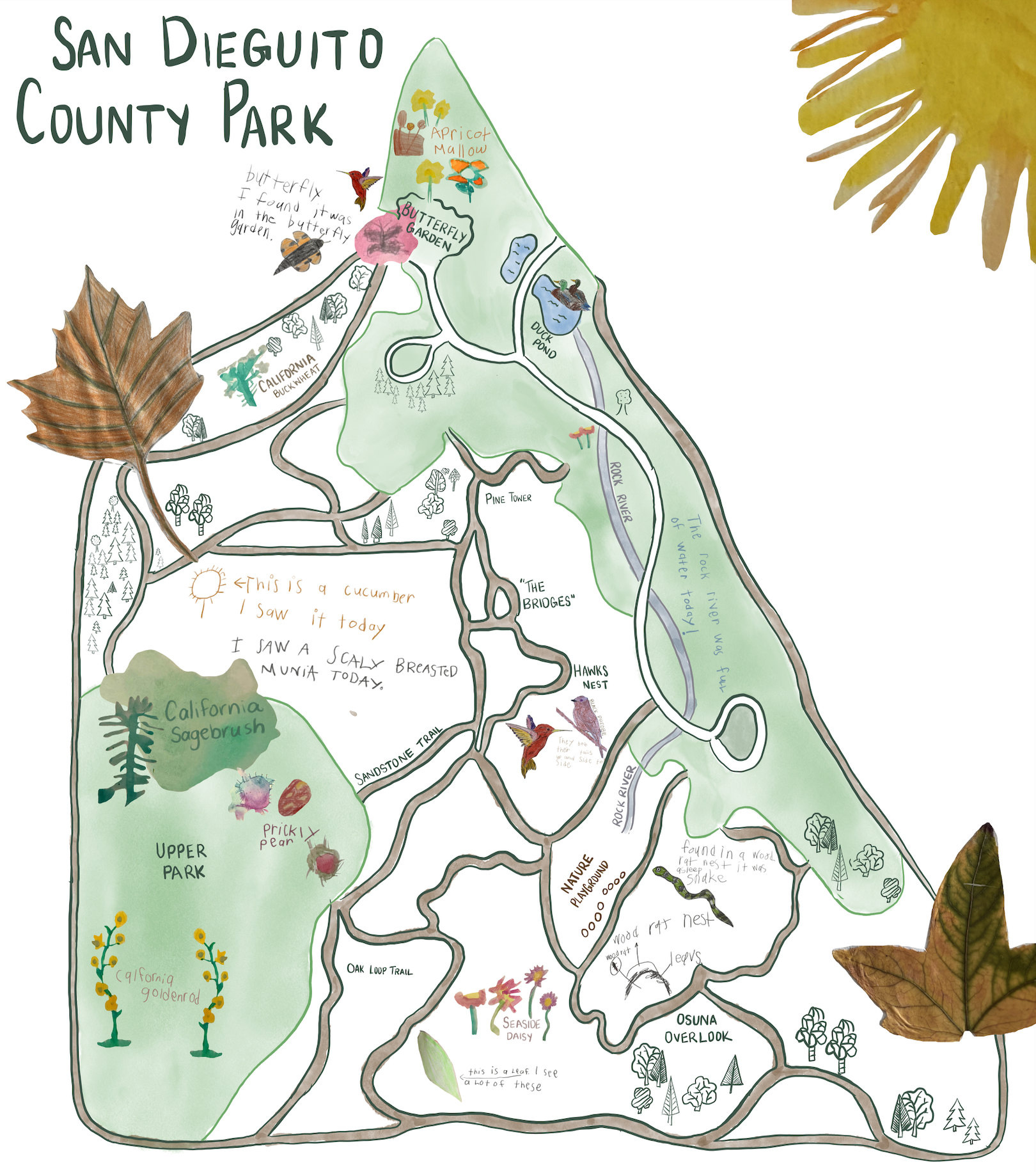
As part of a special Friday collective class, Julian Charter School K-6 grade students, in partnership with The Native School, spent 12 weeks exploring, studying, and observing the flora and fauna of San Dieguito Park. Throughout the 12 week program, students documented research findings, observations, poems, artwork, natural artifacts, and stories to be part of an interactive, living map of San Dieguito Park featuring its unique ecosystems and biodiversity.
Each week’s learning and exploration fed directly into the Living Map Project, inspiring our students to focus on the themes: Pollinators and Insects, Wildlife Observation, Nature Journaling, and Oral Storytelling. Our final project encourages nature protection, respectful observation, and conservation through scientific understanding of ecosystems, art, and storytelling.
The Bug Hotel
Students in our collective class were particularly fascinated by the Butterfly Garden, and spent many weeks observing the different pollinators and insects who reside there. Students learned how native plants are adapted to the local environment and how they create food and habitat for native insects. To encourage even more pollinators to visit this beautiful garden, our students built a Bug Hotel with natural materials to give solitary bees and bugs a safe place to live and rest. Come check it out in the Butterfly Garden and observe some happy plants and pollinators in action!
Plant & Wildlife Observation
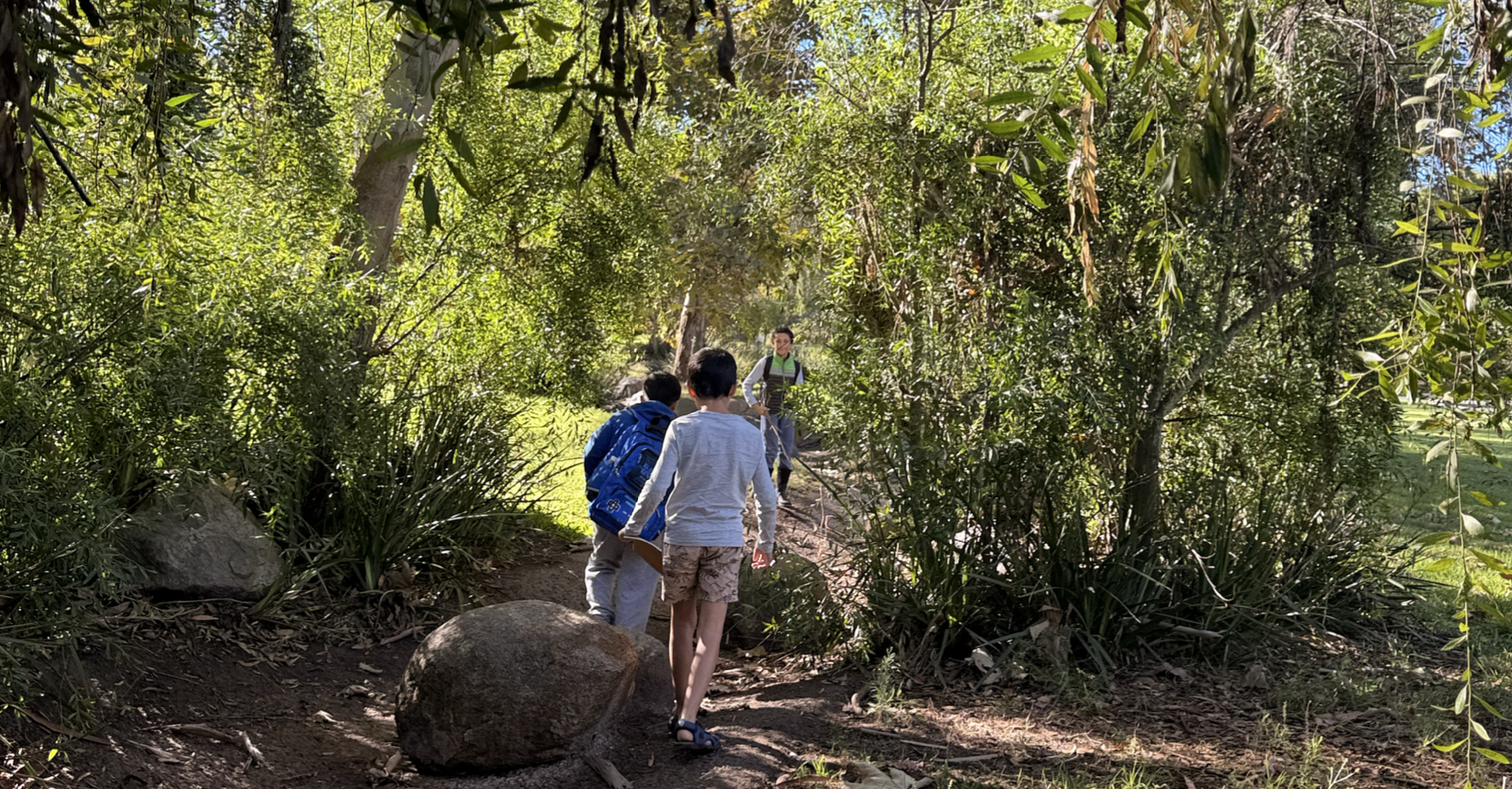
A significant part of our time together was spent hiking and exploring all the amazing trails throughout San Dieguito Park where students had hands on experience observing animals, insects, and plants in their natural habitats. Students learned how to interact with nature respectfully, and utilized concepts like Deer Ears, Owl Eyes, and Fox Feet to quietly and kindly observe the environment around them. We got to explore and study different ecosystems like riparian rivers, dry chaparral trails, and cozy woodlands all in the same park, revealing different animals and habitats around each new corner.
Nature Journaling
A key aspect of students’ documentation process is their nature journals. Each student was given a small notebook to carry around on hikes to add observations, questions, drawings, and specimens to. These journals provided the framework for our shared writing prompts, class artwork, and research findings. These nature journals not only foster an appreciation for the natural world and wildlife observation, but also help promote literacy and art skills in our young learners.
Oral Storytelling
This Land Acknowledgement is to recognize the fact that San Dieguito Park sits on the ancestral lands of the Kumeyaay people, who are the original stewards of this land. The park’s history and land is shaped by and deeply intertwined with the knowledge of the Kumeyaay people who have lived on this land for thousands of years. We are dedicated to preserving and respecting the Kumeyaay’s legacy and contributions to the culture and history here. May we show our gratitude and appreciation for the opportunity to study, play, explore, and live on this land by giving our greatest respect to its first inhabitants.
oral story telling
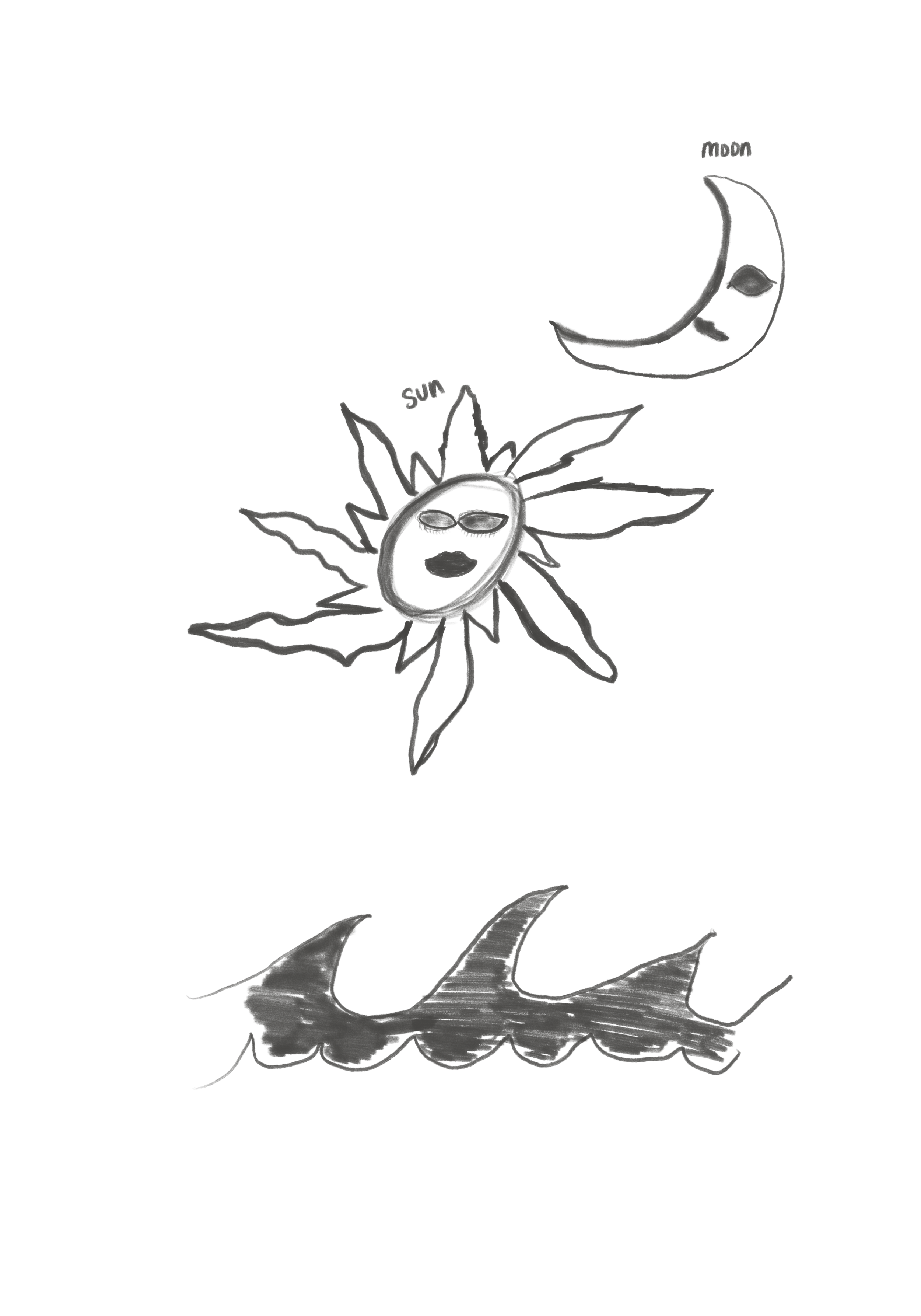
Throughout our 12 week course, students learned about the original stewards of this land, the Kumeyaay people. Students were particularly interested in the tradition of oral storytelling, which is the passing down of knowledge and history through the form of stories spoken aloud. To honor this tradition, our students researched and chose two Kumeyaay oral stories to learn and retell through spoken word.