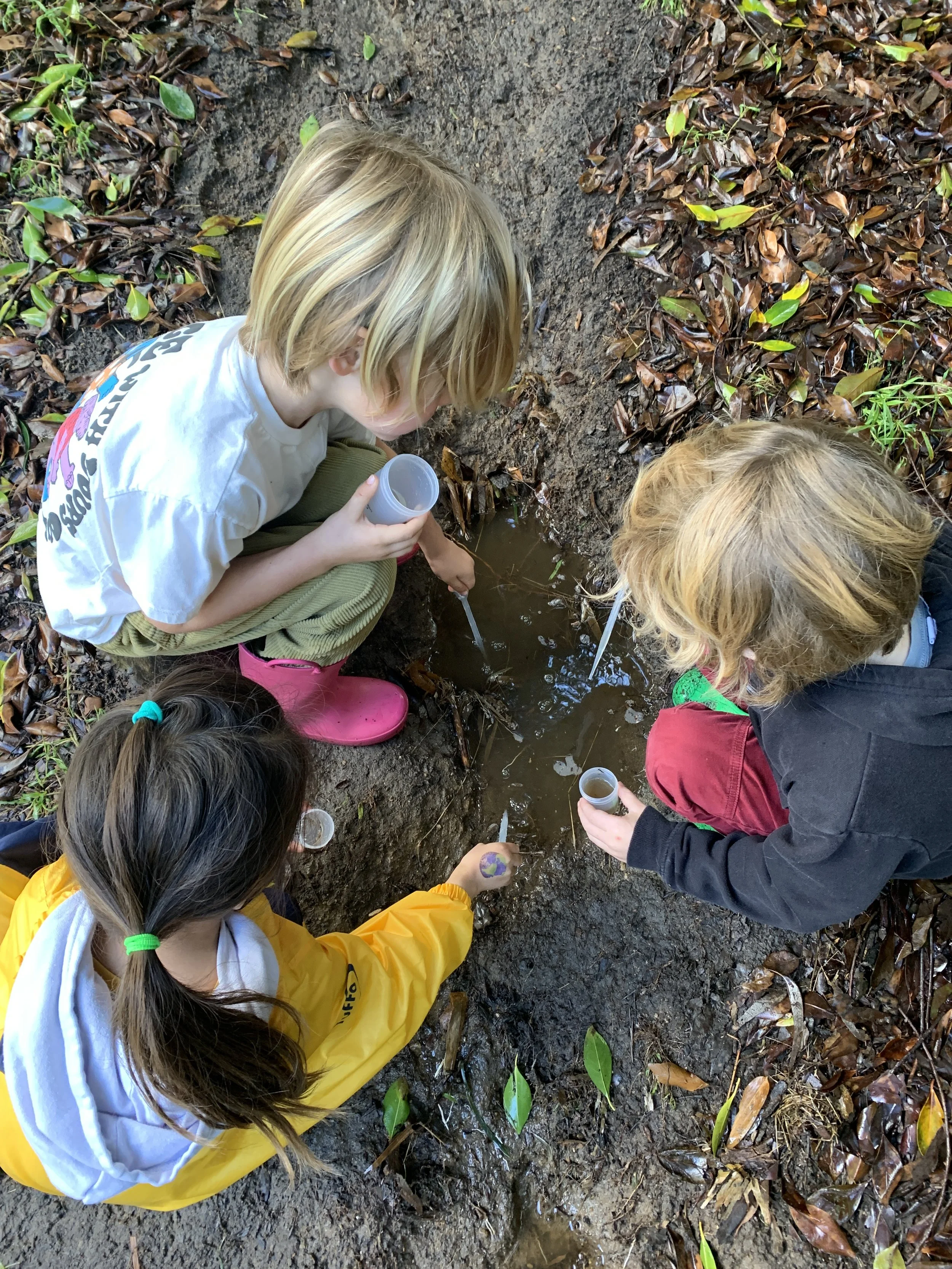
What Makes a High Quality Nature School?
As nature-based education continues to grow, more families are exploring outdoor programs for their children, drawn to the benefits of fresh air, movement, and connection to the natural world.
But with so many options now available, a thoughtful question begins to emerge:
How do I know if a nature school is truly high-quality? Is it the right fit for my child?
Not all programs are created equally, and while many share beautiful values, the how behind the experience matters deeply. At its best, nature-based education is not simply about being outside. It is about how children are guided, supported, and understood within that environment.
This post is meant to offer families a lens - a way to look beyond the surface and better understand what to look for when choosing a program for your child.
It’s More Than Outdoor Play - It’s Intentional, Thoughtful Teaching
Children naturally learn through play, and being outdoors expands that learning in powerful ways. But a high-quality nature program goes beyond unstructured time outside. Educators are:
observing closely
asking thoughtful questions
extending children’s ideas
introducing materials and provocations
supporting collaboration and problem-solving
The difference lies in teacher presence and intentionality. What may look like “just play” is often rich with:
scientific thinking
early literacy and storytelling
mathematical reasoning
social negotiation
The Role of the Teacher Matters Deeply
A strong nature school is built on the strength of its educators. Look for programs where teachers are:
experienced and professionally trained
deeply connected to the natural world
skilled in child development and observation
able to balance freedom with guidance
Children thrive when they are supported by adults who know when to step in, when to step back, and how to extend learning in meaningful ways.
Small group sizes are also essential. In high-quality programs, low ratios allow teachers to:
truly know each child
build strong relationships
notice subtle developmental shifts
support both safety and independence
For example, in our program, ratios are intentionally kept small - 1 teacher for every 6 younger students and 1 for every 8 older students - ensuring that each child is seen, supported, and understood.
Learning Should Be Developmentally Appropriate and Meaningful
One of the most important and often overlooked aspects of early education is developmental appropriateness.
Many traditional programs are shaped by standardized expectations and testing pressures, introducing academic concepts before children are ready to engage with them meaningfully.
In contrast, high-quality nature schools take a different approach. Learning is:
emergent - built from children’s interests and questions
developmentally aligned - meeting children where they are
integrated - weaving literacy, math, science, and social learning together
This does not mean academics are absent. Rather, they are experienced in ways that are:
hands-on
relevant
more deeply understood
Children might explore math through measuring and building, develop literacy through storytelling and journaling, and engage in scientific thinking through observation and inquiry.
Strong programs also thoughtfully align with broader educational standards - ensuring children are supported both in the present and in future transitions.
Documentation: Making Learning Visible
One of the clearest indicators of a high-quality program is how learning is documented and shared. In many settings, families receive only snapshots - a quick photo, a general update.
But in programs inspired by the Reggio Emilia philosophy, documentation is much deeper. Teachers:
capture children’s words and ideas
track long-term projects and investigations
reflect on developmental growth
create narratives that make learning visible
This allows families to truly understand:
how their child thinks
how their skills are evolving
what they are curious about
how they relate to others
Documentation also supports the children themselves, helping them revisit experiences, build on ideas, and see their own growth over time.
It transforms learning from something fleeting into something meaningful and remembered.
A Balance of Freedom, Safety, and Responsibility
Nature-based learning often includes elements of risk - climbing, exploring, navigating uneven terrain. In a high-quality program, this is not left to chance. Instead, children are guided to:
assess risk
make thoughtful decisions
build confidence in their bodies
develop awareness of their environment
Teachers create clear boundaries while still allowing for exploration, supporting children in becoming capable, aware, and resilient.
So… What Should Families Look For?
When choosing a nature school, consider:
How are teachers trained and supported?
What are the student-to-teacher ratios?
How is learning documented and communicated?
Is the curriculum intentional and developmentally appropriate?
How are children’s interests incorporated into learning?
How does the program balance freedom with safety?
The answers to these questions will tell you far more than a website or a single visit ever could.
Choosing a school for your child is not just about logistics - it is about alignment. It is about finding a place where your child will be:
known
respected
challenged
and supported as a whole person
Nature-based education offers something deeply valuable. And when it is done with intention, care, and expertise, it becomes more than a school experience.
It becomes a foundation for how children see themselves and the world around them.
What Children Learn in a Single Day at Nature School (That You Can’t See on a Worksheet)
When families ask what children learn at nature school, the question often comes with an understandable curiosity:
But what are they actually learning?
Without worksheets, desks, or traditional markers of academic progress, it can be difficult to picture. So instead of listing skills, we invite you into a day. Not every moment, but enough to begin to see what is often unseen.
Morning Arrival: Transition, Independence, and Belonging
A child arrives, sometimes eager, sometimes hesitant.
They say goodbye to a parent, greet their teachers, sign in, hang their bag, engage in a provocation activity. What looks simple is anything but.
In these first moments, children are practicing:
emotional regulation
separation and trust
independence and responsibility
social awareness
They are learning: I can do this. I belong here.
Simple daily rhythms like signing in, putting away a backpack, or beginning a provocation give children a sense of agency from the very start of their day.
Instead of being guided through each step, they begin to think, “I know what to do. I can take care of this.”
These small moments build independence, confidence, and executive functioning skills such as sequencing, responsibility, and task initiation.
Mid-Morning Exploration: Inquiry, Problem-Solving, and Collaboration
A group gathers near a fallen log, attempting to build a bridge across a small dip in the earth.
There are disagreements. Ideas overlap. Plans fail. They try again.
In this moment, children are engaging in:
engineering and spatial reasoning
negotiation and communication
persistence through challenge
flexible thinking
They are asking:
What will make this stable?
Why did that fall?
How can we do this together?
No worksheet could ever replicate the depth and complexity of this kind of learning. When children engage in real-world, hands-on experiences, they are not just practicing a skill - they are applying it, questioning it, and building upon it in meaningful ways.
These lived experiences anchor understanding, making it more lasting and transferable. They spark curiosity, invite exploration, and lay the groundwork for deeper thinking, creativity, and continued growth far beyond the moment.
Snack & Conversation: Language, Storytelling, and Social Connection
As children and teachers sit together to eat, conversations unfold. There is an equity in sitting in a circle on the forest floor, all voices valued.
They recount what they’ve built, what they’ve noticed, what they plan to do next.
Teachers encourage students to share their thoughts and ideas, and interweave developmentally appropriate academic skills as they arise.
Here, children are developing:
expressive language
narrative sequencing
listening skills
perspective-taking
They are learning how to:
enter a conversation
hold space for others
build on shared ideas
These are the foundations of literacy - not just reading and writing, but communication. When children share ideas, recount experiences, listen to others, and build stories together, they are developing the foundations of literacy in its fullest sense.
These everyday interactions strengthen vocabulary, sequencing, comprehension, and the ability to express meaning clearly. More importantly, they teach children that communication is relational - that words are tools for connecting, collaborating, and understanding the world.
Reading and writing are built upon this foundation, but it is through conversation and storytelling that literacy truly comes to life.
Afternoon Work: Creativity, Literacy, and Meaning-Making
A child sits with a clipboard, sketching a leaf they found earlier.
Another begins dictating a story about the bridge they built.
Nearby, a small group arranges sticks and flowers into a design - revisiting a pattern they noticed in nature.
In these quieter moments, children are engaging in:
early writing and symbolic representation
fine motor development
observation and attention to detail
creative expression
Literacy and art are not separate subjects here, they are ways of thinking and expressing. When nature is honored as the “third teacher,” there is no need for a rigid, one-size-fits-all curriculum.
The natural world offers endless, dynamic opportunities for inquiry, changing with the seasons, weather, and the children’s own curiosity. A fallen leaf can spark scientific observation, mathematical thinking, and storytelling all at once.
By following these real, lived experiences, learning becomes relevant, integrated, and deeply engaging. Rather than moving children through predetermined lessons, we allow learning to emerge - guided by skilled teachers, rooted in development, and inspired by the richness of the environment itself.
Risk & Movement: Confidence, Awareness, and Resilience
A child climbs slightly higher than before, fine and gross motor skills in action as they reach and step.
They pause. Assess. Adjust their footing.
A teacher stands nearby - present, but not intervening unless needed.
In this moment, the child is learning:
risk assessment
body awareness
confidence and courage
Independence
problem-solving
resilience after small failures
They are discovering: I am capable. I can trust myself.
When children are given the chance to take appropriate risks in supportive environments, they don’t become reckless, they become capable, aware, and confident.
Risky play doesn’t mean unsafe play - it means supported opportunities for children to test limits, assess challenges, and build confidence within thoughtful boundaries.
Risky play teaches children not just how to be brave, but how to be thoughtful in their bravery.
Closing Circle: Reflection and Memory
At the end of the day, the group gathers again. Lunch is enjoyed beneath the trees, stories are read together, and discoveries shared.
Children share what stood out to them - what they built, what they noticed, what felt important.
A teacher records their words. They may write the story of the day together, make a list of favorite discoveries or celebrate through song - this is documentation in action.
Children are learning to:
reflect on their experiences
articulate their thinking
listen to others’ perspectives
revisit and deepen understanding
A daily closing routine creates space for children to pause, reflect, and make meaning of their experiences. When teachers document these reflections, children see that their ideas are not fleeting; they can be held, revisited, and built upon.
Over time, this practice helps children understand that learning is not just something that happens in the moment, but something they can return to, share with others, and carry forward with them.
What You Won’t See - But What Matters Most
At the end of the day, your child may come home muddy and spent, with twigs in their hair and rocks in their pockets, and a heart full of stories.
What you won’t see in their smiling (or sleepy!) face is everything they practiced. These skills are not extras, they are the foundation for all future learning:
critical thinking
collaboration
emotional regulation
creativity
confidence
empathy
curiosity
In high-quality nature-based programs, learning is simply expressed differently.
Through thoughtful observation, intentional teaching, and meaningful documentation, these moments are captured and shared, allowing families to see the depth behind the day.
Because when we look closely, we begin to understand:
Children are not “just playing.”
They are building the skills that will carry them for a lifetime.
They are learning how to think, how to relate, how to persevere, and how to make meaning of the world around them. They are developing confidence in their bodies, trust in their ideas, and a sense of belonging within a community.
These foundations may not always be measured on paper, but they are deeply felt - and they shape not only how children learn, but who they become.
Seeds of Service: Growing Kindness, Community, and Connection
At The Native School, our learning extends far beyond the classroom and the forest trails. Each year, our students learn not only how to explore, observe, and care for the land - but also how to care for their community.
That belief is at the heart of our annual fundraiser, Seeds of Service.
Each year, we raise money to give back to the beautiful and vital nature preserves that make our program possible. These preserves and parks are not only cherished green spaces for our children to learn and play — they are living ecosystems that support wildlife, protect native habitats, and strengthen the environmental health of our region. Our program could not exist without these preserved lands, and caring for them is an act of reciprocity.
Seeds of Service is our way of saying:
We are part of this place — and we give back to what sustains us.
🌿 What is Seeds of Service?
Instead of a traditional product-based fundraiser, Seeds of Service is rooted in individual Acts of Kindness that students and families carry out independently at home and in their local communities. Friends and family are invited to pledge support for each act completed — turning meaningful service into a way to sustain the nature spaces we love.
Children might:
help a neighbor or family member
clean up a local park or trail
write a kind note or thank-you card
donate gently-used items
feed wildlife respectfully at approved locations
support a community garden
help with household responsibilities
or find their own creative act of caring
In this way, students experience that service is something we do, not something we watch from afar - and that even small acts can ripple outward.
We raise funds to support our local preserves while also spreading kindness, strengthening community ties, and nurturing empathy.
🌼 Why Service Matters in Early Childhood
For young children, acts of service are deeply developmental experiences. When children participate in helping, supporting, and contributing, they begin to understand:
I have something valuable to offer.
My actions make a difference.
I belong to a community.
Acts of service foster:
social-emotional development
empathy and perspective-taking
self-confidence and independence
problem-solving and initiative
collaboration and leadership
a sense of identity as a capable, caring person
Service supports emotional regulation as well — children experience pride, responsibility, and connection rather than praise alone.
Instead of asking children to perform kindness, we invite them to practice kindness in real life contexts. That distinction matters.
🌱 How to Encourage Acts of Service in Engaging, Child-Centered Ways
Children are far more invested when they feel ownership and choice. Here are a few ways families can make Seeds of Service meaningful and joyful:
🌿 Begin with conversation
Invite your child into reflection:
“Who in our life might need help right now?”
“What makes our community or neighborhood feel cared for?”
“Where have you noticed people working hard?”
This helps children connect service with empathy rather than obligation.
🌿 Offer choices — not assignments
Lay out a few possibilities and ask:
“Which acts of service feel important to you?”
Children may choose something familiar — or surprise you with their creativity.
🌿 Celebrate the process, not just the outcome
Instead of “Good job!” try:
“You noticed that Grandpa needed help — how did that feel?”
“What made you decide to clean up the trail?”
“Who do you think will feel supported by your work?”
This encourages intrinsic motivation and compassion-based thinking.
✏️ Learning Extensions: Literacy & Numeracy Through Service
Treat service as a project, not a chore. This turns service into an experience rich with learning and meaning. Here are a few ways families can extend the experience at home:
✍️ Literacy-Rich Reflections
Children can:
draw a picture of their act of service
dictate or write a short story about what they did
label tools, people, or steps involved
create thank-you cards or kindness notes
make a mini-book documenting the experience
Reflection helps children process:
emotions
motivation
perspective-taking
It also reinforces narrative storytelling and expressive language.
🔢 Numeracy & Early Math Connections
Service experiences are full of math moments, such as:
counting collected litter pieces
sorting donated items
measuring ingredients for baked goods delivered to a neighbor
comparing “before and after” quantities
tallying acts completed over time
tracking pledge amounts or totals
These experiences support:
one-to-one correspondence
categorizing and grouping
sequencing and planning
early data collection in a meaningful, real-world context.
Math becomes relational — not abstract.
💚 Planting Seeds That Grow Beyond the Moment
Seeds of Service is more than a fundraiser — it is a practice in gratitude, reciprocity, and compassion.
Our children learn that:
they are connected to the land
they are part of their community
and they have the power to contribute in meaningful ways
As we give back to the preserves that sustain our learning, we also nurture something just as important:
Kindness that grows — roots that deepen — and children who see themselves as helpers and stewards of the world around them.
📄 Free Seeds of Service Learning Resources
To support families in planning and reflecting on their acts of service, we’re sharing a set of printable tools that students (or anyone following along) can use at home:
🌿 Pre-planning sheet with images of service acts children can color and choose from
🌿 Descriptions and examples of various kid-friendly service ideas
🌿 Sharing and reflection page where students can draw or write about one act to share with the class
These resources help children:
plan with intention
visualize possibilities
reflect on their experience
and proudly share their contributions with peers
Get your free printable resources HERE!
The Importance of Documentation, Part II: Learning That Lives On
In our previous post in this series, we explored documentation as a way of making children’s learning visible - a practice rooted in listening, reflection, and respect for children’s thinking.
But the true power of documentation often reveals itself years later.
When children grow older, move into new schools, and step into wider worlds, documentation becomes something more than a classroom practice. It becomes memory. Identity. A thread that connects who they were, who they are, and who they are becoming.
To understand this more fully, we reached out to Native School alumni families - not to ask what children achieved, but to ask what they carried with them.
What follows are just two stories, but they speak to a much larger truth.
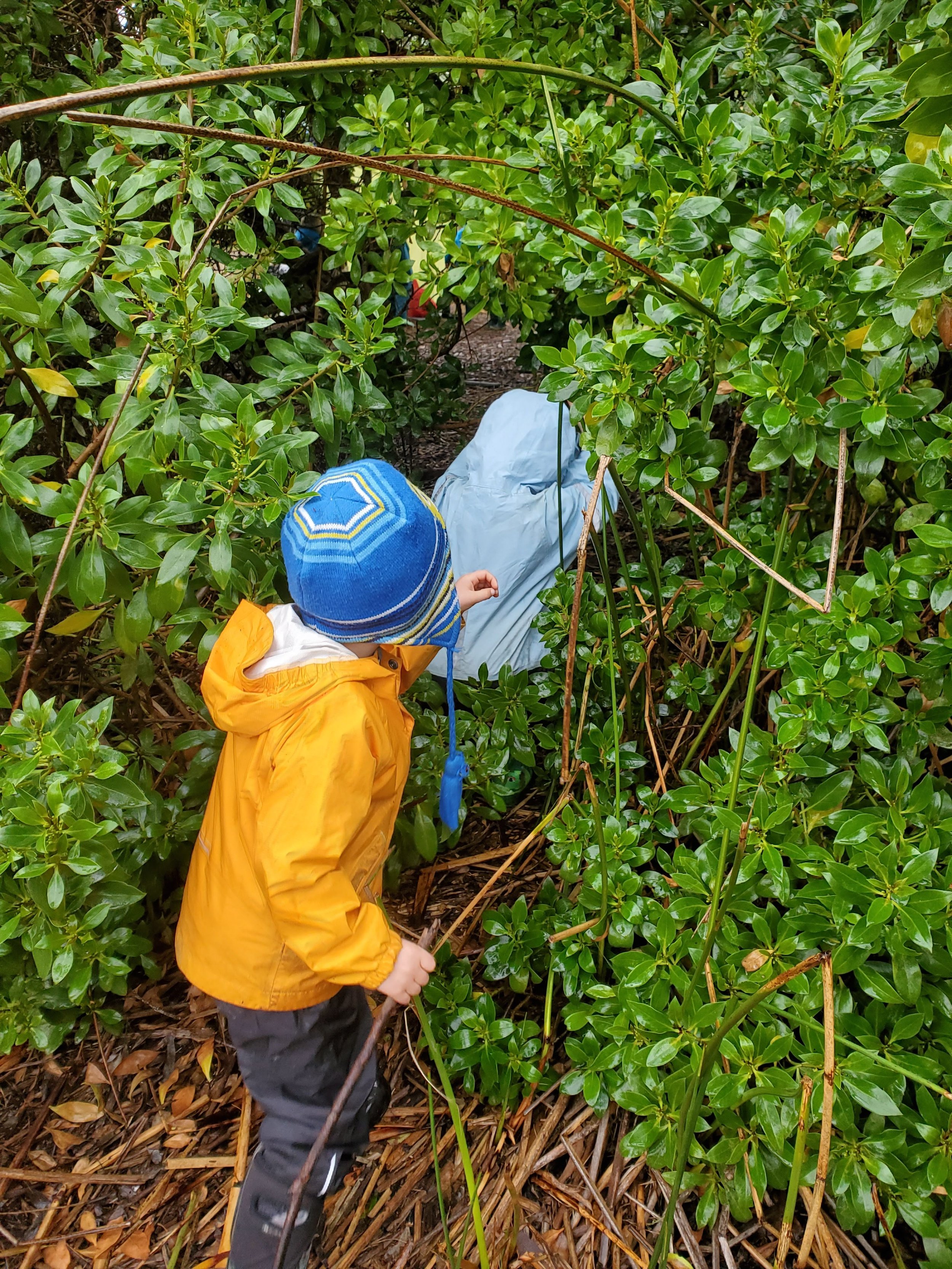
Learning That Continues Long After the Classroom
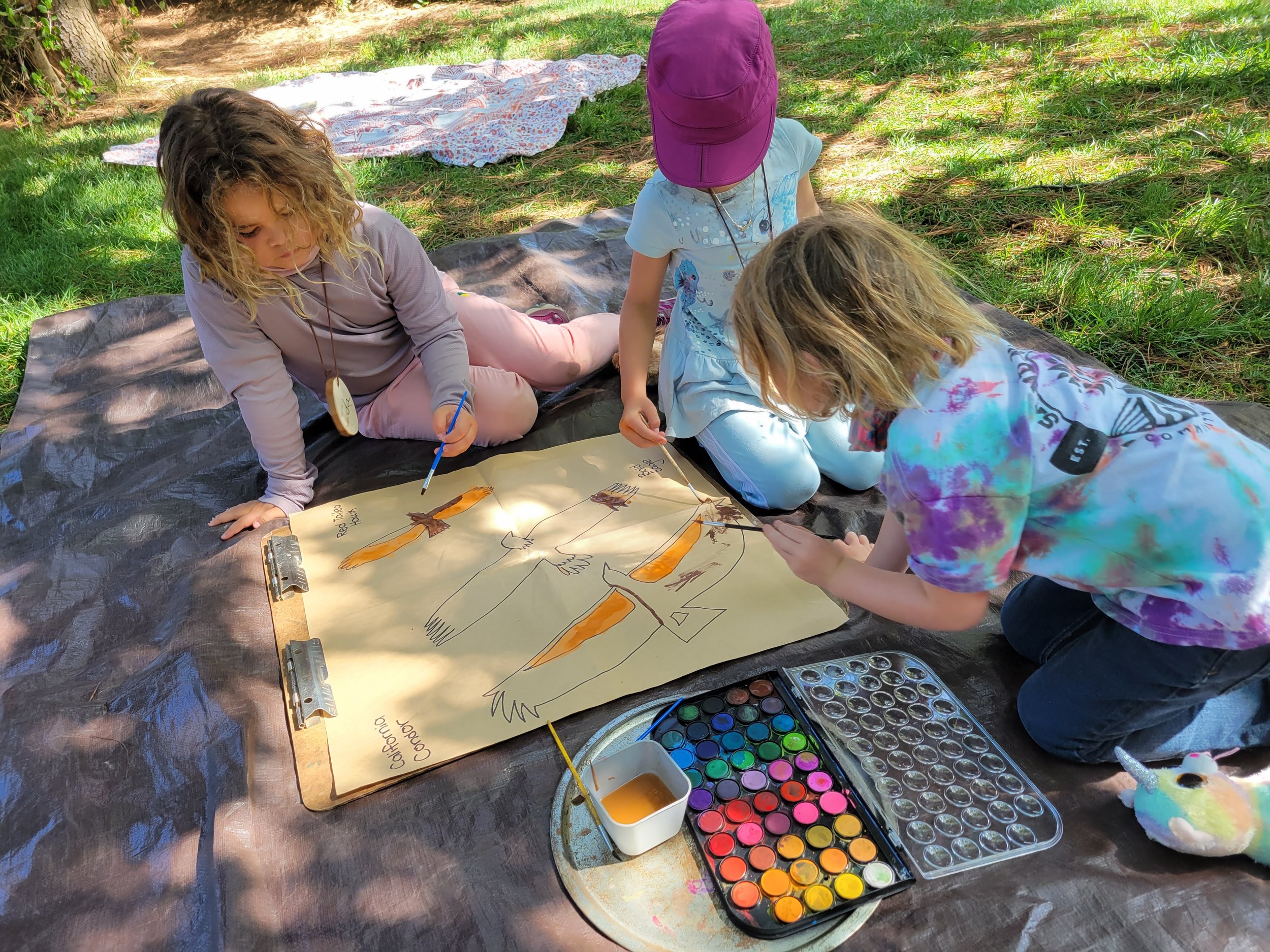
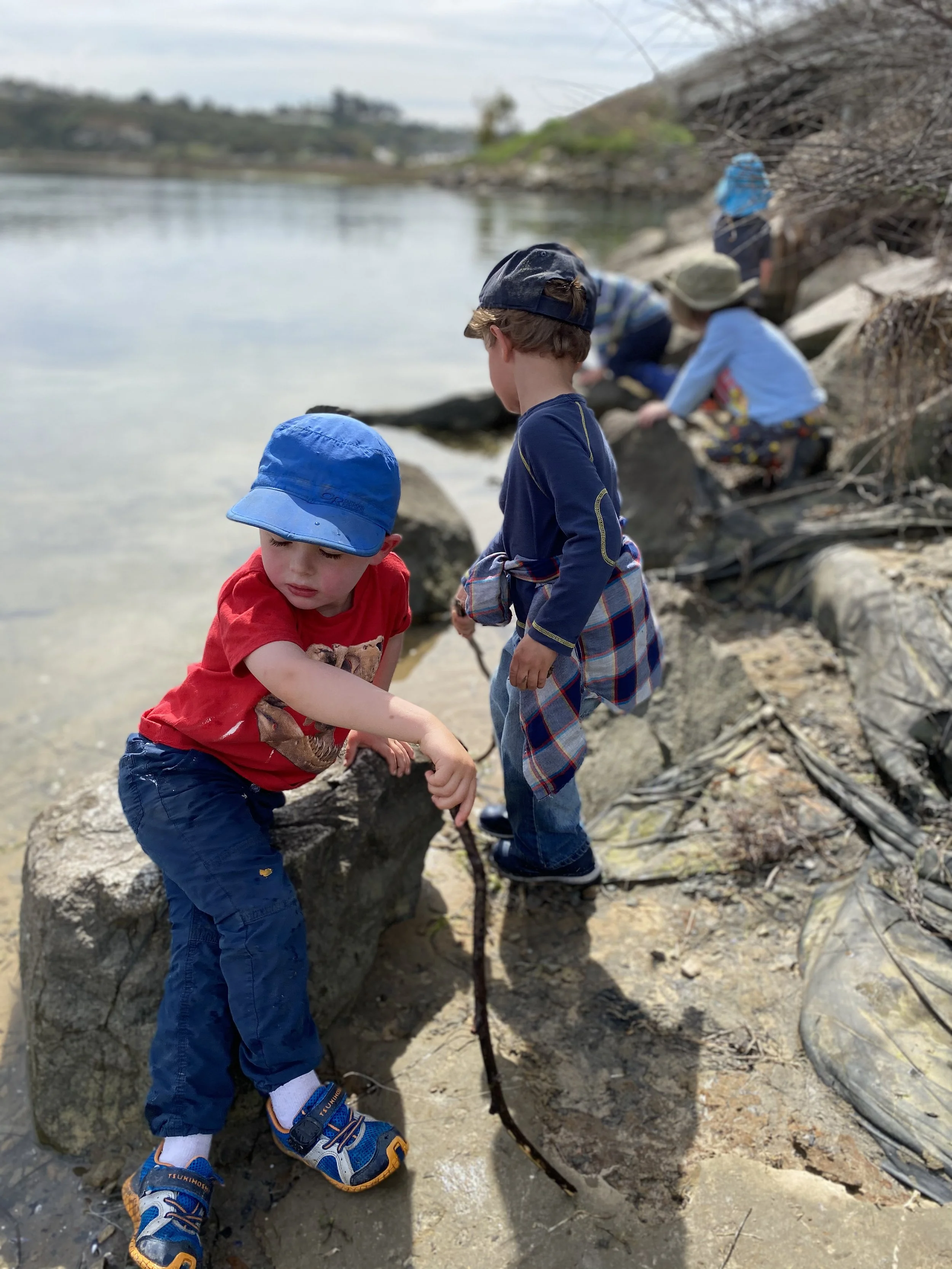
One alumna, Ida, attended The Native School for a single year in pre-kindergarten, along with several summer programs. She is now 11 years old and the practices she learned are still alive in her daily life.
Her family shared that one of the strongest memories Ida carries is keeping a nature journal. To this day, they don’t leave the house without pen and paper. Ida is constantly drawing, observing, recording, and interpreting the world around her.
What began as documentation - slow looking, careful noticing, returning to ideas - became a way of being.
Her mother describes Ida as “the bridge” in their family: someone who connects experiences that are felt but difficult to articulate. Ida notices patterns beyond the obvious, sees relationships beyond the linear, and listens not just with her ears, but with her whole body.
This ability did not come from memorizing facts.
It grew from Ida’s own innate abilities and immersion in environments, both at home and at school, that encouraged stillness and learning how to pay attention.
Documentation, revisiting observations, returning to questions, and honoring multiple interpretations helped Ida hone the habit of reflective thinking. She learned early that understanding is layered, and that meaning emerges over time.
Now, as Ida prepares to begin middle school, her family continues to seek out experiences that nourish her senses: time near the ocean, creative expression, and encounters with the natural world that counterbalance and enrich daily life.
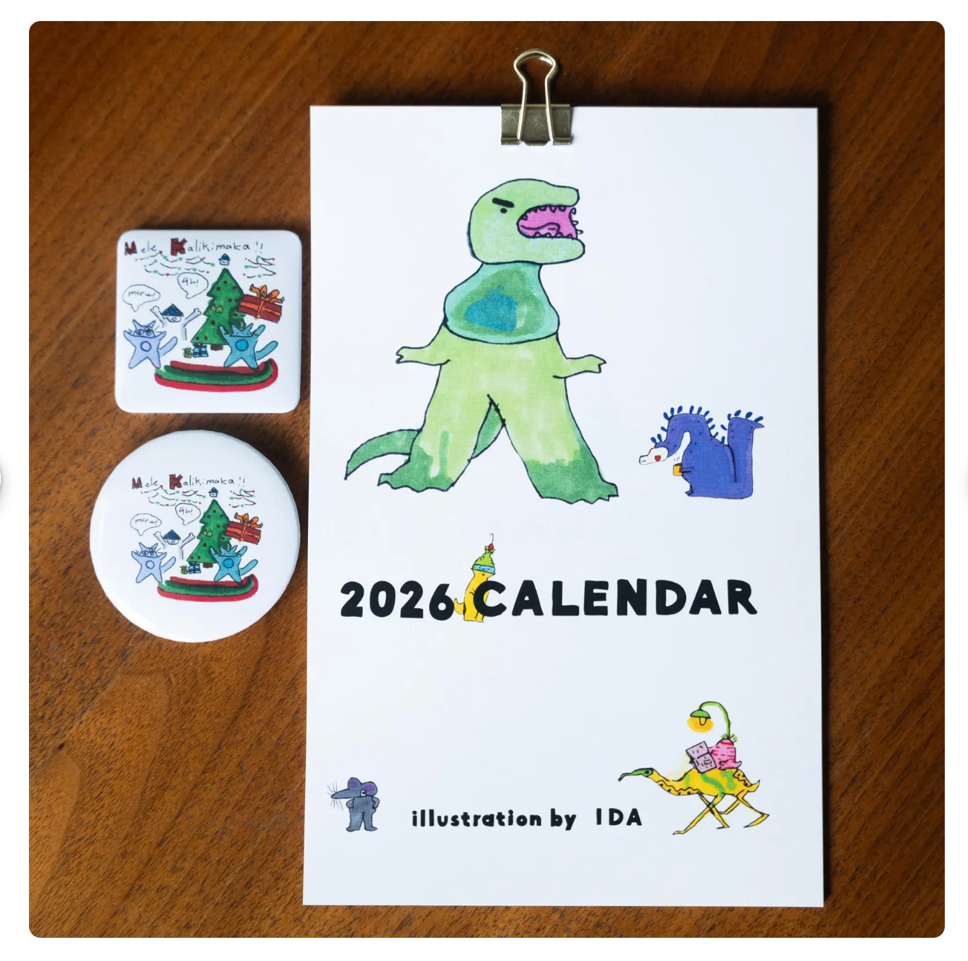
Ida is a swimmer, an artist, and the founder of her own small art business, Slow Cheetah, a space where imaginative creatures and rich visual storytelling invite others into her inner world. Through her art, documentation continues - not as an assignment, but as self-expression.
Her parent shared a lasting image: picking up a younger Ida from school one afternoon, covered in dirt, soaking wet, beaming, and carrying an authentic experience that still holds joy today.
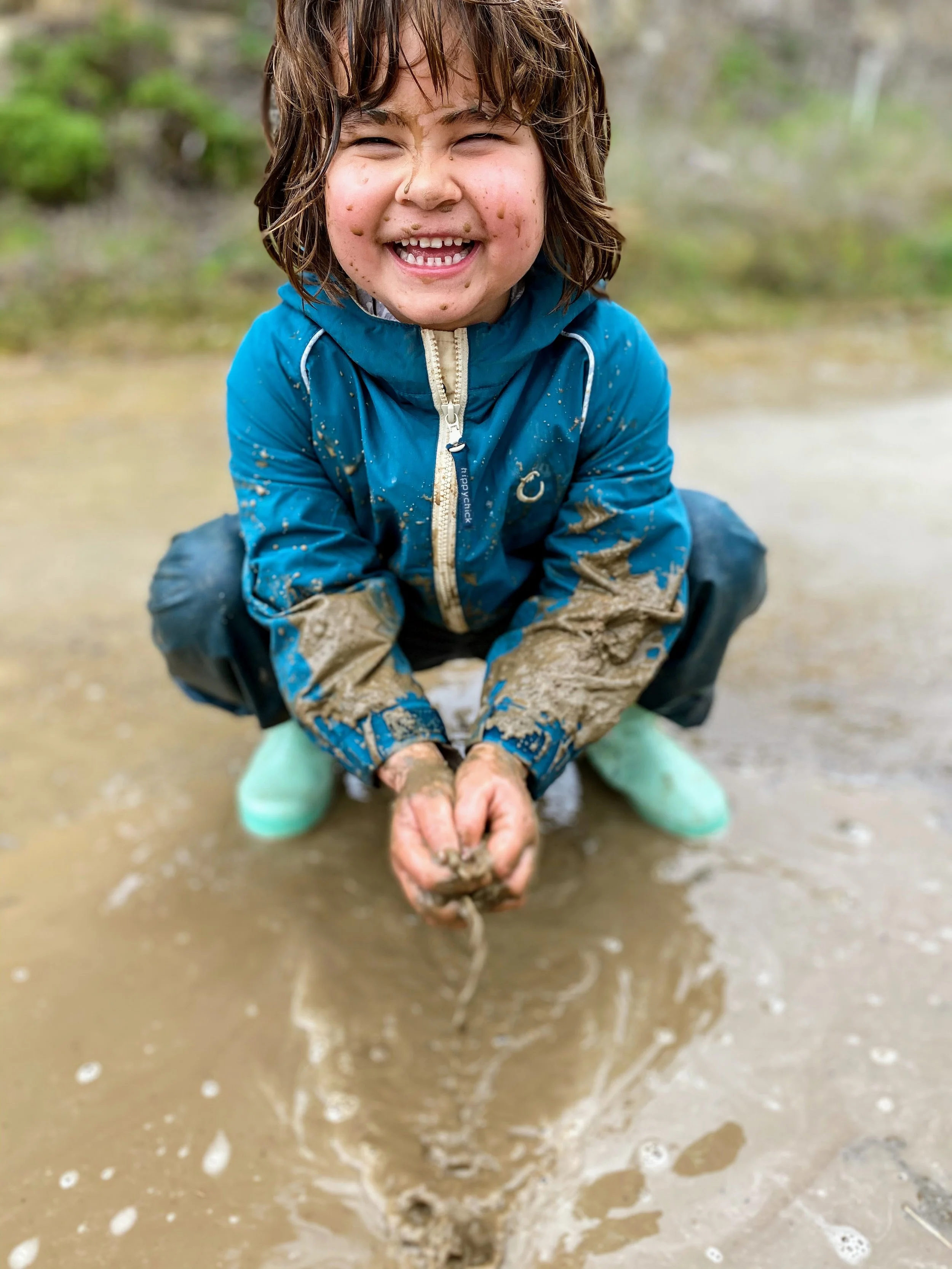
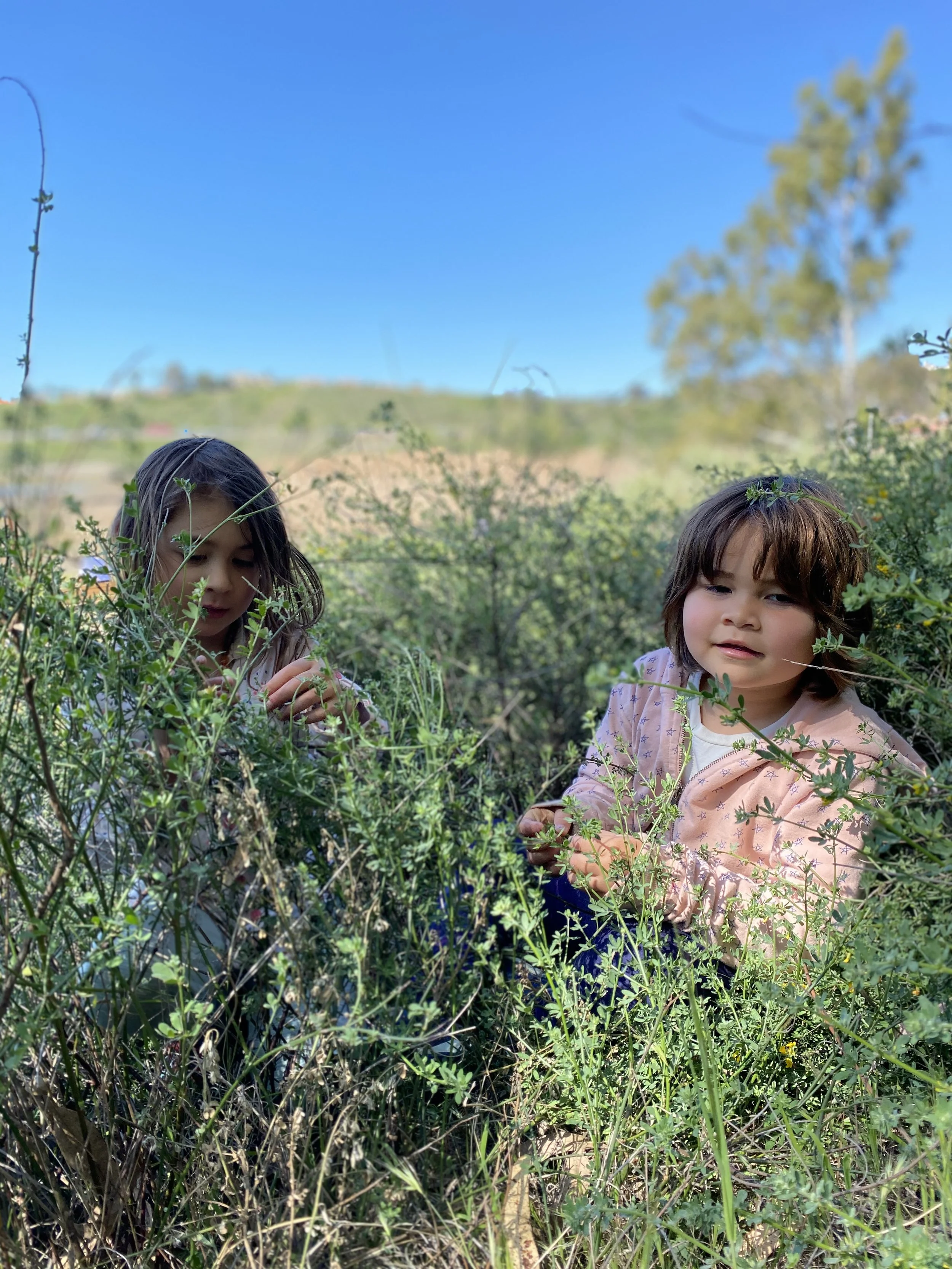

Documentation as a Foundation for Confidence, Empathy, and Joy
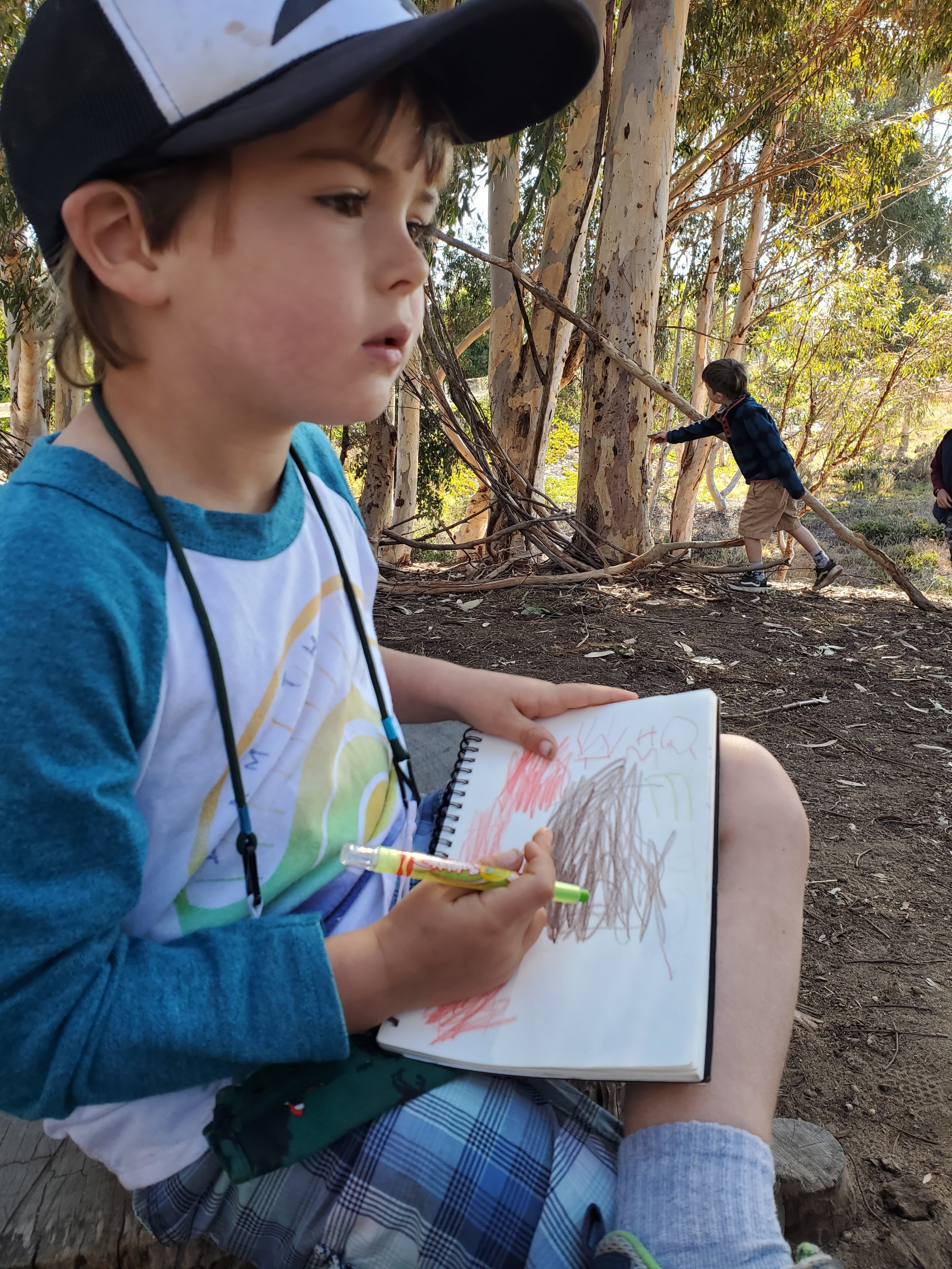
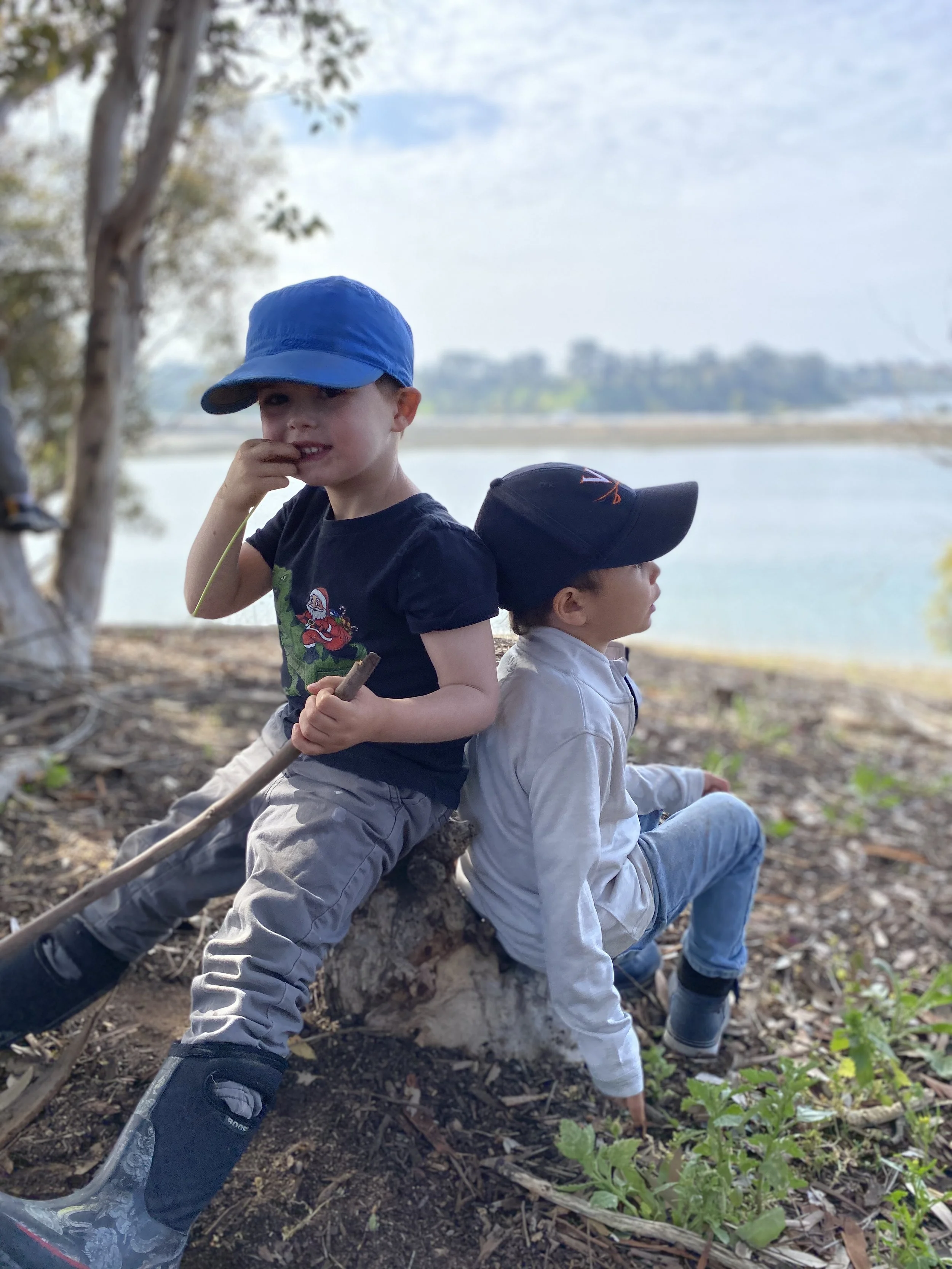
Another alumni family shared reflections from their son, Arthur, who attended the Native School for three years, beginning as a 3-year-old preschooler and continuing through the Kindergarten program.
Today, he is a fourth grader in his third year of Spanish dual immersion, an avid reader, a violinist, and a competitive swimmer. Academically capable and creatively engaged, yes - but what stands out most to his current teachers is something else entirely.
They consistently note his consideration for others.
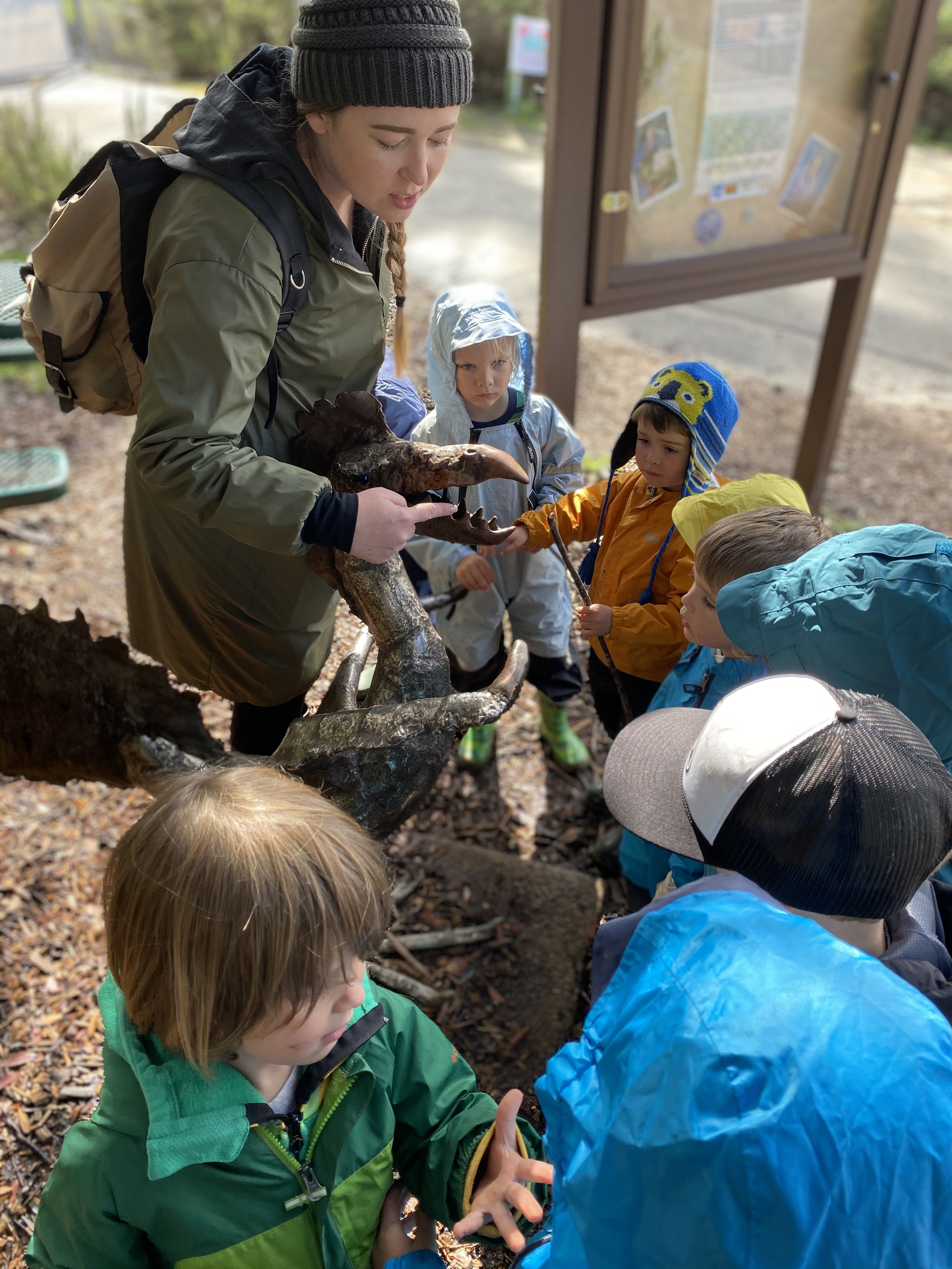
This capacity did not emerge by chance. Arthur was a kind and compassionate friend to others from the start, but being immersed in an environment that values the well-being of even the smallest things - the spiderlings in the sparkle of dew, the wood sorrel growing in the sun - helped him develop this trait. His teachers from that time can recall how Arthur would often take on the role of “Nature Protector,” venturing down the biggest hill holding the hand of a less steady friend and reminding us all - “don’t step on the seedlings!”
During his time at the Native School, documentation supported a culture where children’s voices were listened to, revisited, and respected, both individually and collectively. Through shared reflection, Arthur and the other children learned that their actions affected others, that collaboration mattered, and that community was something they helped build.
This family describes the outdoor classroom and kindness culture as central to their commitment to the school and why they stayed as long as possible. The natural environment supported sensory development, while documentation helped children slow down, reflect, and find meaning in shared experiences, including in spreading kindness.
Some of Arthur’s fondest memories from that time include:
discovering different types of bird calls
becoming a confident hiker and runner
exploring lagoon trails
writing books with classmates
building friendships
and learning with a teacher who saw him
As he put it himself:
“I already loved the outdoors, but it made me love it even more.”
That love - documented, revisited, and celebrated - became part of who he is.
Why Documentation Matters Over Time
These stories remind us that documentation is not about archiving the past, it is about shaping the future. It’s about communicating meaning.
When children experience their thinking being recorded, revisited, and valued, they internalize powerful beliefs:
My ideas are worth remembering
Learning is something I participate in
Growth happens through reflection
I am capable of making meaning
Documentation supports children in developing:
metacognition
empathy
creativity
confidence
a strong sense of self
It teaches them how to look closely, think deeply, and return to experiences with curiosity rather than urgency.
Years later, those habits remain.
Holding the Story Together
At The Native School, documentation allows us to hold children’s stories with care - not just while they are with us, but long after they leave. It creates continuity, from muddy boots and nature journals to art studios and violin practice, and on, to so many new exciting horizons.
We are so grateful to our alumni families for sharing their stories - and for reminding us that meaningful learning never truly ends.
When we document learning, we don’t simply capture moments. We plant seeds. And sometimes, years later, we get the gift of seeing how those seeds have grown.
The Importance of Documentation: Seeing Children as Capable, Curious Learners
At The Native School, documentation is more than a record of what children do — it is a practice of deep listening. It is our way of honoring children’s thinking, preserving their questions, and making their learning visible to families, educators, and the children themselves.
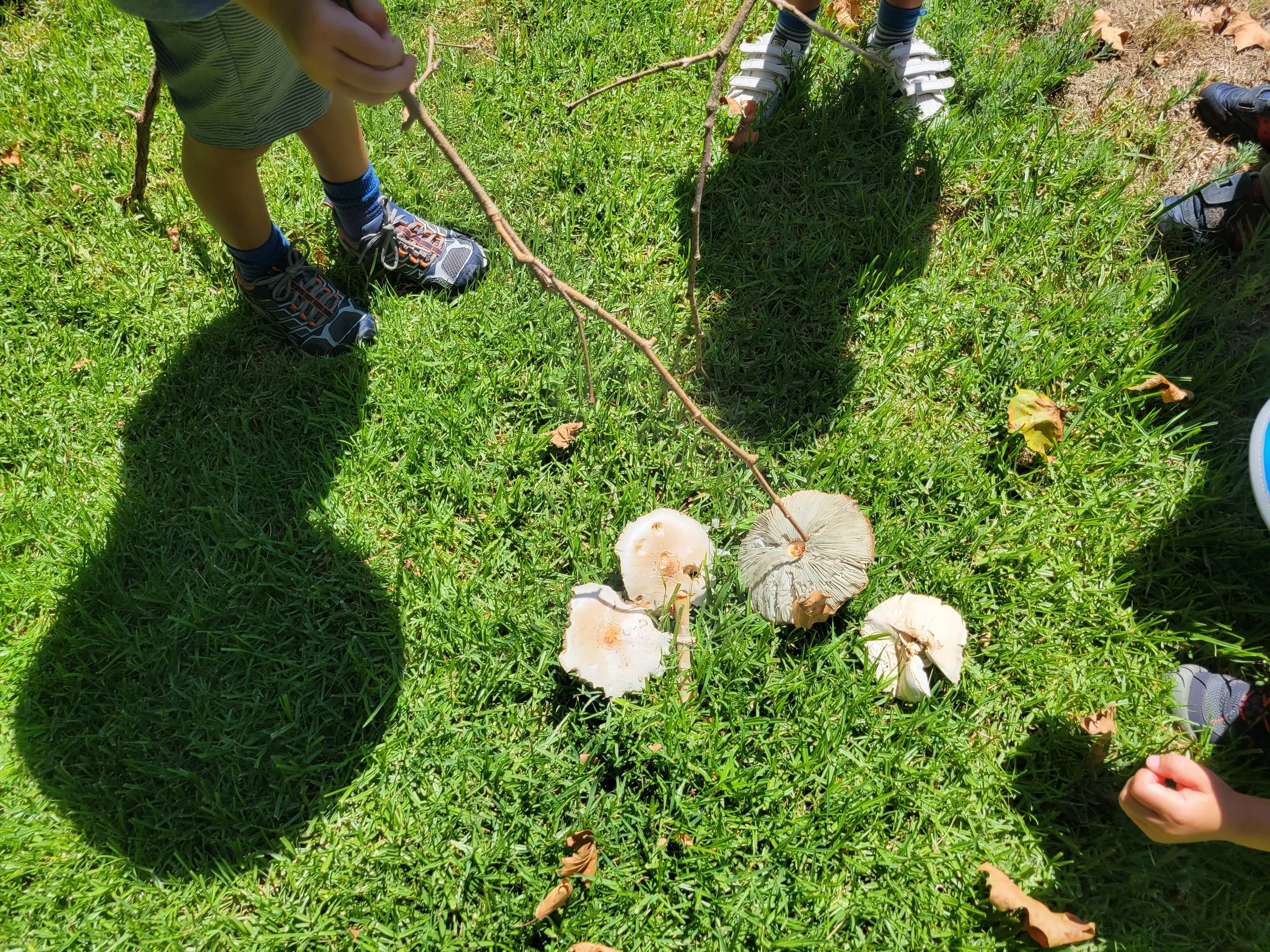
In nature-based, inquiry-driven learning, so much of the magic happens in quiet moments: a child tracing the path of an ant, a group negotiating how to balance a plank, a conversation about fairness beside a cedar stump. These moments are meaningful — but without documentation, they disappear as quickly as they arrive.
Documentation allows us to slow down and notice. It gives us the chance to ask:
What ideas are children returning to?
How are they building relationships — with materials, with land, with one another?
What does this tell us about who they are becoming as learners and community members?
Through photos, transcripts of conversations, written reflections, student work, and long-term project artifacts, documentation becomes a bridge between experience and understanding.
It is not about proving productivity — it is about witnessing growth.
Why Documentation Matters in Childhood Learning
🌿 It shows children that their ideas matter.
When children see their words quoted, their drawings displayed, or their hypotheses revisited weeks later, they experience a powerful message:
“My thinking is important. My perspective is valued. I am part of something meaningful.”
This fosters:
intrinsic motivation
confidence in their voice
a strong sense of belonging
Children recognize that school is not something done to them — it is something they co-create.
🌿 It supports reflective, intentional teaching.
Documentation is also a tool for educators. By revisiting photos, notes, and conversations, teachers can:
notice emerging interests
identify developmental patterns
extend learning through new provocations
Instead of planning from assumptions, we plan from evidence. We ask:
What questions did children ask today?
Where did their curiosity deepen?
How can we revisit this experience tomorrow?
In this way, documentation fuels a living, evolving curriculum — one responsive to the children in front of us.
🌿 It strengthens family connection and trust.
Families often see only the beginning and end of a school day — the muddy boots, the tired smiles, the snippets of stories shared on the drive home. Documentation offers a window into the richness of children’s daily experience.
Through shared daily narrative reflections, photo collages, portfolios, and project archives, families can see:
how their child problem-solves
how friendships form and shift
how confidence grows over time
Rather than asking, “What did you do at school today?” families can ask specific questions informed by the documentation they have received. Many families enjoy reviewing the daily reflection slide together to share about the day through photos and narrative!
This deepens conversation, strengthens relationships, and reinforces the value of slow, meaningful learning.
🌿 It preserves memory and identity.
Documentation allows children to look back and say:
This is who I was.
This is what I cared about.
This is how I grew.
Across seasons and years, they can trace:
the evolution of their drawings
the development of their storytelling
the growing complexity of their problem-solving
They learn that growth is not a straight line — it is a living process, layered with curiosity, struggle, resilience, and wonder. And that story is worth keeping.
This Series: Tracing Learning Over Time
This post is the beginning of a larger exploration into why we document and how those stories continue beyond the classroom.
In our next installment, we will reconnect with Native School alumni — reflecting on:
what they carried forward from their time here
how early experiences in nature shaped their confidence and identity
the role documentation played in preserving those early learning journeys
We look forward to sharing their voices and stories, honoring the beautiful through-line between past and present.
Because when we document learning, we don’t just remember what children did — we remember who they were becoming.
Why We Are Different: More Than Just Outdoor Time
Why We Are Different
At The Native School, we are often asked what makes us different from other outdoor or nature-based programs. While learning outdoors is an important part of our identity, it is not the whole story. What truly sets us apart is how and why we teach — and the intentional philosophy that guides every decision we make, including our approach to academics.
We use a flexible, emergent curriculum framework that follows student interests while intentionally embedding California State Standards and developmental milestones in age-appropriate ways. Learning is responsive, but it is never random. Teachers thoughtfully observe, document, and plan experiences that ensure children are growing academically, socially, and emotionally.
Although our classrooms extend into forests, fields, and trails, we provide robust, research-informed academics. Literacy, numeracy, and critical thinking are integrated into daily experiences through project work, narration, documentation, and hands-on exploration. Children read, write, problem-solve, and reason — not through worksheets, but through meaningful, real-world contexts that deepen understanding and retention.
We believe documentation matters - not to label children, but to support them. By tracking learning over time, our team remains accountable, reflective, and responsive, ensuring no child’s needs go unseen. Ongoing data collection provides insight into each child’s developmental trajectory, helping us recognize emerging strengths, address gaps, and plan meaningful interventions when appropriate.
Nature acts as the third teacher, offering rich opportunities to apply academic skills in authentic ways. Measuring growth in the garden, mapping trails, recording observations, and storytelling inspired by place allow children to meet academic goals while developing curiosity, confidence, and a love of learning.
Nature Is Not a Backdrop — It Is a Teacher
Many programs use outdoor space as an alternative classroom. At The Native School, nature is considered the third teacher, alongside children and educators. This belief comes directly from the Reggio Emilia approach and is reflected in how we design learning experiences.
Children are not simply playing outside; they are:
Observing patterns and changes
Building theories about the world
Returning to questions over time
Learning to care for the land they know deeply
Nature shapes our curriculum, rather than just hosting it.
We Are Rooted in Educational Philosophy, Not Trends
Our program is grounded in well-established approaches including:
Reggio Emilia, with its focus on inquiry, documentation, and collaboration
Charlotte Mason, emphasizing narration, observation, and meaningful knowledge
Developmental research, supporting play, movement, and child-led learning
Rather than following quick-fix models or packaged curricula, we thoughtfully design experiences that grow with the children.
Projects With Purpose
Project-based learning is central to our work. Children engage in long-term investigations inspired by real questions and real places — often in partnership with our local park and community.
These projects:
Build deep understanding over time
Integrate literacy, math, science, and social learning
Teach children that their ideas can impact the world
This is learning that feels meaningful because it is meaningful.
Literacy Through Experience, Not Worksheets
At The Native School, literacy grows from lived experience. Children develop language by:
Narrating discoveries
Telling stories inspired by place
Recording observations through drawing and writing
Engaging in rich conversations
Reading and writing are connected to purpose and meaning, not isolated skills.
Social-Emotional Learning Is Embedded, Not Isolated
Rather than teaching SEL as a separate subject, we weave it into everyday experiences. Mixed-age collaboration, open-ended play, and shared projects naturally support:
Emotional regulation
Perspective-taking
Problem-solving
Conflict resolution
Children learn these skills because they need them, not because they are scripted.
Documentation as a Way of Listening
We document learning to understand children, not to evaluate them against rigid benchmarks. Through photos, observations, and children’s own words, we make learning visible and guide future experiences.
Documentation allows us to:
Reflect thoughtfully as educators
Share growth with families
Honor children’s thinking
It keeps the focus on the learner, not the product.
A Relationship-Centered Community
Above all, The Native School is built on relationships — between children, teachers, families, and the land itself. Learning happens best when children feel known, respected, and connected.
We believe education should be:
Thoughtful, not rushed
Deep, not performative
Rooted in research and relationship
We know that children thrive when they have meaningful relationships and a supportive community.
We are different because we refuse to choose between developmentally appropriate practice and academic rigor. At The Native School, children receive the strong academic foundation they need — grounded in research, responsive to their interests and actual development, and brought to life through meaningful experiences outdoors.
Raising Curious Storytellers: Narration and Literacy Outdoors
At The Native School, we believe literacy is more than decoding words on a page — it is the art of making meaning. Children learn best when they are invited to speak, observe, wonder, and tell stories long before we expect them to write paragraphs or read fluently. One of the most powerful (and beautifully simple) practices we use in our nature-based classrooms is narration.
Narration is the practice of telling back what a child has seen, heard, read, or experienced — in their own words. It is a child-led approach that develops comprehension, vocabulary, sequencing, critical thinking, and confidence. And because it can be done anywhere, it pairs perfectly with our outdoor learning environment.
Below, we share how narration supports early literacy and how families can bring this gentle practice into their home and daily routines.
Why Narration Matters for Early Literacy
Narration builds foundational literacy skills in a way that feels organic and playful. When children tell a story from memory or describe what they see in nature, they are strengthening:
Comprehension
Narration requires children to process information, choose what details matter, and make sense of events in order. Even short retellings activate the same comprehension muscles they’ll later use while reading books.
Vocabulary & Language Development
Outdoor experiences give children rich, sensory language to work with: mossy, rough, fluttering, winding, sunlit, dripping. When children describe what they notice, their vocabulary naturally expands.
Sequencing & Story Structure
Telling a story from beginning to middle to end helps children internalize the structure of narrative — a critical skill for both reading and writing.
Attention & Observation Skills
Narration teaches children to notice. Whether they’re describing a bird’s call or recalling a story read during Morning Gather, they learn to pay attention to details in the world around them.
Confidence & Voice
Because narration is about their own words, children feel empowered. There is no pressure to be right — only to share what they think and see.
How We Use Narration Outdoors at The Native School
Nature Walk Retellings
During hikes and explorations, children pause to describe what they’ve noticed. These small moments strengthen memory and self-expression:
“What has changed since last week?”
“What happened on our walk so far?”
“Tell me about the creature we just saw.”
Storytelling Circles
After reading a book, teachers invite children to retell the story in their own words, sometimes using images, props, natural materials, or gestures.
Object Narration
A pinecone, feather, or shell becomes a storytelling prompt. Children narrate where it might have come from, what happened to it, or how it moves through the ecosystem.
Experience Narration
After climbing a tree, building a shelter, or cooking outdoors, children describe the process from start to finish. This builds procedural language and confidence.
Narration at Home: Simple Prompts for Families
Narration is wonderfully flexible and can be layered into everyday routines — no materials required. Here are a few gentle ways to begin:
After Reading Together
“Tell me what happened in this story.”
“What part do you remember most?”
“Can you tell this story using your own words?”
On a Nature Walk
“What do you notice right now?”
“Tell me the story of this leaf/rock/stick.”
“What do you think happened here?”
During Daily Life
“Can you tell me about your day from the beginning?”
“What did you build/play/learn today?”
“Explain how you made that!”
With Creative Play
“Tell me what your characters are doing.”
“What happened in your pretend world so far?”
“Can you narrate what your animals/figures are up to?”
Bedtime Retell
Invite your child to narrate the highlights of their day or retell a favorite bedtime story — a calming ritual that builds memory and connection.
Tips for Successful Narration
Keep it pressure-free — narration is about expression, not perfection.
Allow pauses — silence gives children space to think.
Model narration yourself occasionally (“Here’s what I noticed today…”)
Don’t interrupt or correct; let their thoughts unfold naturally.
Keep it short — one or two sentences is enough for young children.
Celebrate effort — “I love hearing your ideas.”
A Path Toward Lifelong Literacy
Narration nurtures children who are observant, thoughtful, expressive, and confident — the foundation of strong readers and storytellers. By bringing storytelling outdoors, we tap into children’s natural curiosity and help them form deep connections between language and the living world.
Every leaf, every shadow, every squirrel chase becomes a story waiting to be told.
Reggio Emilia and Nature-Inspired Homeschooling
When children learn outdoors, something magical happens. A stick becomes a wand, a log becomes a balance beam, a leaf becomes a story waiting to be told. At The Native School, we see daily how a Reggio Emilia approach combined with nature immersion nurtures curiosity, independence, and joy. But you don’t have to be in a formal outdoor program to bring these practices home.
If you’re homeschooling your 4–7-year-old—or simply looking for ways to enrich your family’s time outside—here are some Reggio-inspired, nature-based practices you can try right away.
1. Follow Your Child’s Curiosity
Reggio Emilia is rooted in the belief that children are natural researchers. Instead of starting with a rigid lesson plan, begin with your child’s questions.
If your child notices an ant hill, pause and explore. Encourage questioning: Where do they go? How do they carry food?
Set up a “provocation” by placing items invitingly - for example, place a magnifying glass, jars, an informative picture book about ants, and paper with art supplies near the ant hill
Follow their curiosity and invite inquiry with connections to other topics such as engineering, math, and storytelling
Tip: Keep a simple “wonder journal” where your child can draw, dictate, or write their questions. This can become the foundation for mini-projects.
2. Create with Nature, Not Just About It
Art is a natural conduit to learning, helping to document and solidify understanding, but instead of premade craft kits, try using what the natural world offers.
Make paint from crushed berries, turmeric, or soil.
Use sticks as paintbrushes or clay tools.
Invite your child to create a leaf collage or shadow tracing.
Imitate natural patterns like animal tracks, fractals and spiderwebs.
Tip: Ask, “What story does this picture tell?” Be mindful not to place your adult assumptions on their creation - instead, ask! Their organic answer often becomes as meaningful as the artwork itself and takes on new life as a written narration.
3. Weave Math into Outdoor Play
Math doesn’t have to live in workbooks—it’s all around us.
Collect stones and sort them by size or shape.
Compare leaf lengths with a string “measuring tape.”
Create patterns with pinecones, shells, or flowers.
Count and record the amounts of birds, lizards or snails spotted.
Tip: Encourage your child to record their discoveries in numbers or drawings. For example: “Five big leaves + two small leaves = seven.” Use twig tally marks or ten frames to support one-to-one counting.
4. Grow Literacy Through Narration
Narration—retelling a story or experience in your own words—is a powerful Reggio practice for literacy.
After a walk, invite your child to narrate “the story of” what they saw: “First we saw a hawk, then we heard the water, then we found a feather.”
Write their words down in a nature journal, or help them write them. In a hurry to get to the next stop? Record their voice to use in dictation later!
Encourage storytelling with found objects—stones become characters, sticks become paths.
Tip: Pair narration with sketching. A drawing + dictated words makes a beautiful, child-authored “page.”
5. Make Nature Your Classroom Routine
Homeschooling doesn’t have to look like “traditional” school at all. For ages 4–7, the rhythm matters more than a strict schedule.
Start with a morning nature walk.
Rotate daily invitations such as: Monday – Math in Nature, Tuesday – Storytelling Outdoors, Wednesday – Art with Natural Materials.
End the day with reflection: “What was your favorite discovery today?” This can develop into shared or independent writing or support emergent literacy through verbal narration.
Tip: A simple basket with a lined/unlined notebook, art & writing supplies, twine, a magnifying glass, and nature treasures becomes your mobile classroom.
Remember: You’re Learning Together
Homeschooling isn’t about perfection—it’s about partnership. You don’t need all the answers. In fact, it’s powerful to say: “I don’t know. Let’s find out together.” Your child will see that learning is a lifelong journey, and that curiosity is the true curriculum.
At The Native School, we believe that the natural world is the richest environment for early learning. Whether your child is enrolled in our program or learning at home, you can nurture wonder, creativity, and resilience by following their questions, listening deeply, and letting nature lead the way.
Try this week: Go outside with your child, sit under a tree, and ask: “What do you think the tree would say if it could talk?” Write their response down. You might be surprised at the poetry in their words.
Learn more about Emergent Writing to inform your homeschooling practices with our informational flyer detailing the steps.
Print the free Emergent Writing on the Go kit and get started in your backyard, local park, or on your favorite nature trail!