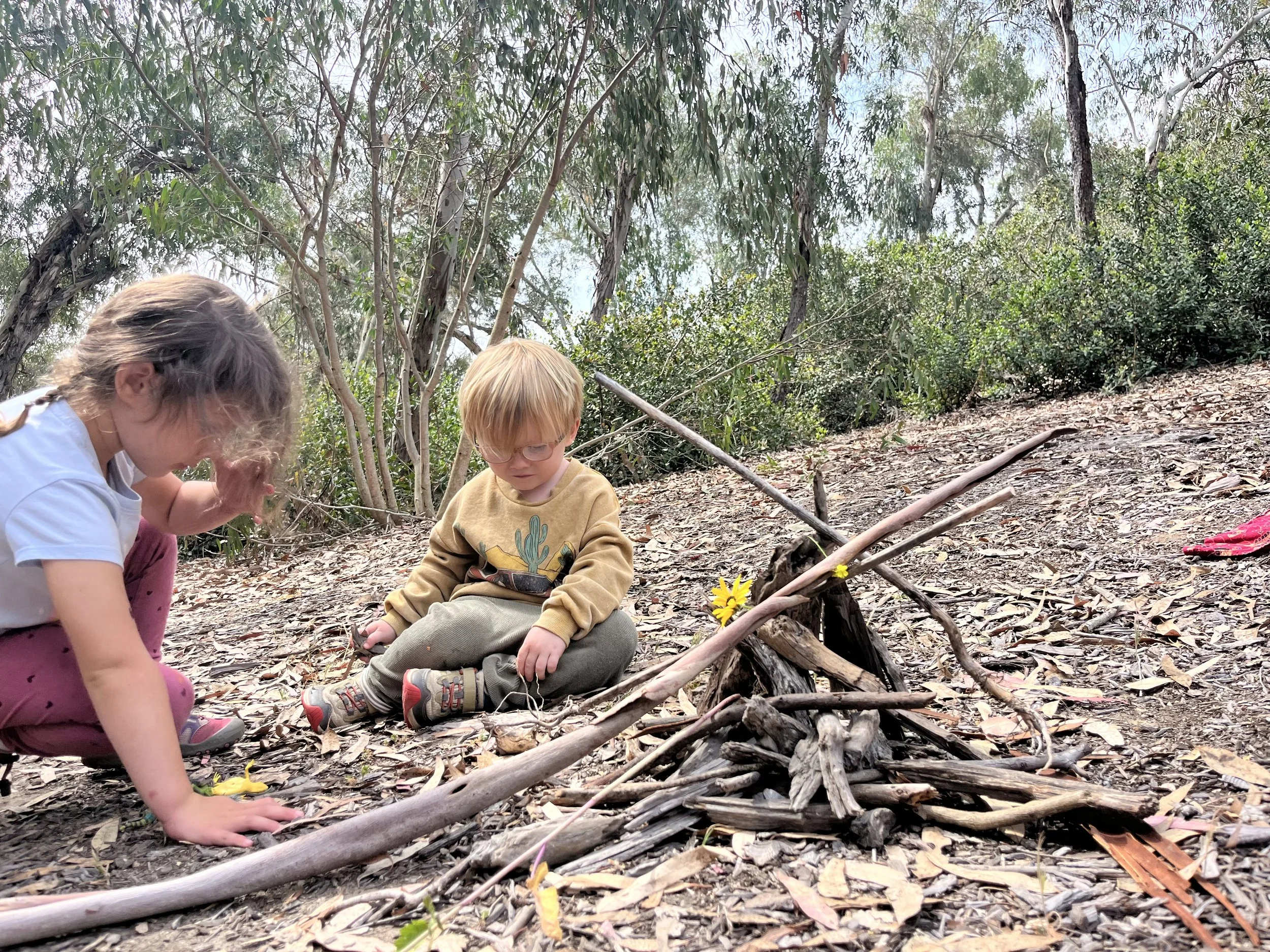
As nature-based education continues to grow, more families are exploring outdoor programs for their children, drawn to the benefits of fresh air, movement, and connection to the natural world.
But with so many options now available, a thoughtful question begins to emerge:
How do I know if a nature school is truly high-quality? Is it the right fit for my child?
Not all programs are created equally, and while many share beautiful values, the how behind the experience matters deeply. At its best, nature-based education is not simply about being outside. It is about how children are guided, supported, and understood within that environment.
This post is meant to offer families a lens - a way to look beyond the surface and better understand what to look for when choosing a program for your child.
It’s More Than Outdoor Play - It’s Intentional, Thoughtful Teaching
Children naturally learn through play, and being outdoors expands that learning in powerful ways. But a high-quality nature program goes beyond unstructured time outside. Educators are:
observing closely
asking thoughtful questions
extending children’s ideas
introducing materials and provocations
supporting collaboration and problem-solving
The difference lies in teacher presence and intentionality. What may look like “just play” is often rich with:
scientific thinking
early literacy and storytelling
mathematical reasoning
social negotiation
The Role of the Teacher Matters Deeply
A strong nature school is built on the strength of its educators. Look for programs where teachers are:
experienced and professionally trained
deeply connected to the natural world
skilled in child development and observation
able to balance freedom with guidance
Children thrive when they are supported by adults who know when to step in, when to step back, and how to extend learning in meaningful ways.
Small group sizes are also essential. In high-quality programs, low ratios allow teachers to:
truly know each child
build strong relationships
notice subtle developmental shifts
support both safety and independence
For example, in our program, ratios are intentionally kept small - 1 teacher for every 6 younger students and 1 for every 8 older students - ensuring that each child is seen, supported, and understood.
Learning Should Be Developmentally Appropriate and Meaningful
One of the most important and often overlooked aspects of early education is developmental appropriateness.
Many traditional programs are shaped by standardized expectations and testing pressures, introducing academic concepts before children are ready to engage with them meaningfully.
In contrast, high-quality nature schools take a different approach. Learning is:
emergent - built from children’s interests and questions
developmentally aligned - meeting children where they are
integrated - weaving literacy, math, science, and social learning together
This does not mean academics are absent. Rather, they are experienced in ways that are:
hands-on
relevant
more deeply understood
Children might explore math through measuring and building, develop literacy through storytelling and journaling, and engage in scientific thinking through observation and inquiry.
Strong programs also thoughtfully align with broader educational standards - ensuring children are supported both in the present and in future transitions.
Documentation: Making Learning Visible
One of the clearest indicators of a high-quality program is how learning is documented and shared. In many settings, families receive only snapshots - a quick photo, a general update.
But in programs inspired by the Reggio Emilia philosophy, documentation is much deeper. Teachers:
capture children’s words and ideas
track long-term projects and investigations
reflect on developmental growth
create narratives that make learning visible
This allows families to truly understand:
how their child thinks
how their skills are evolving
what they are curious about
how they relate to others
Documentation also supports the children themselves, helping them revisit experiences, build on ideas, and see their own growth over time.
It transforms learning from something fleeting into something meaningful and remembered.
A Balance of Freedom, Safety, and Responsibility
Nature-based learning often includes elements of risk - climbing, exploring, navigating uneven terrain. In a high-quality program, this is not left to chance. Instead, children are guided to:
assess risk
make thoughtful decisions
build confidence in their bodies
develop awareness of their environment
Teachers create clear boundaries while still allowing for exploration, supporting children in becoming capable, aware, and resilient.
So… What Should Families Look For?
When choosing a nature school, consider:
How are teachers trained and supported?
What are the student-to-teacher ratios?
How is learning documented and communicated?
Is the curriculum intentional and developmentally appropriate?
How are children’s interests incorporated into learning?
How does the program balance freedom with safety?
The answers to these questions will tell you far more than a website or a single visit ever could.
Choosing a school for your child is not just about logistics - it is about alignment. It is about finding a place where your child will be:
known
respected
challenged
and supported as a whole person
Nature-based education offers something deeply valuable. And when it is done with intention, care, and expertise, it becomes more than a school experience.
It becomes a foundation for how children see themselves and the world around them.