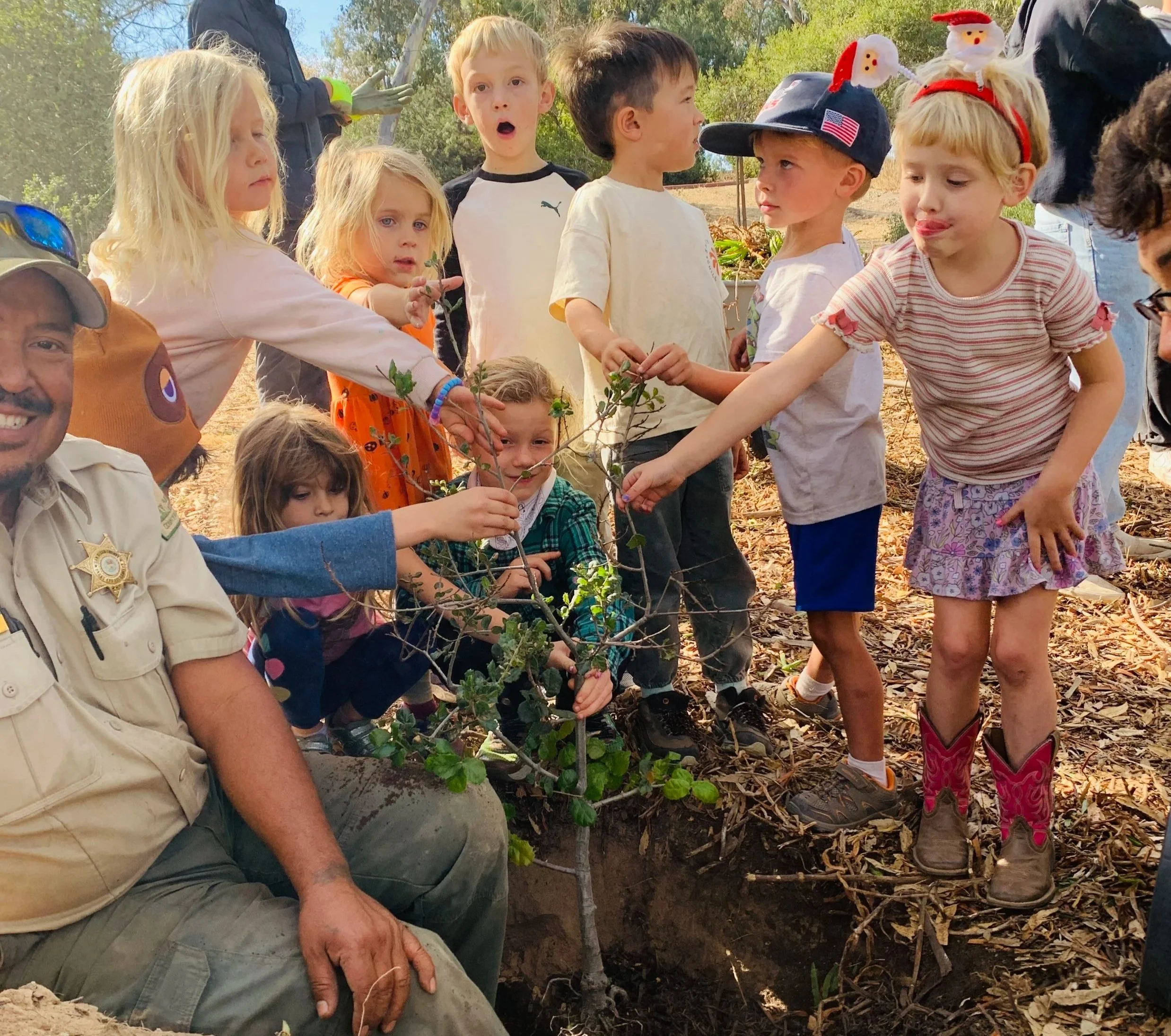
At The Native School, our learning extends far beyond the classroom and the forest trails. Each year, our students learn not only how to explore, observe, and care for the land - but also how to care for their community.
That belief is at the heart of our annual fundraiser, Seeds of Service.
Each year, we raise money to give back to the beautiful and vital nature preserves that make our program possible. These preserves and parks are not only cherished green spaces for our children to learn and play — they are living ecosystems that support wildlife, protect native habitats, and strengthen the environmental health of our region. Our program could not exist without these preserved lands, and caring for them is an act of reciprocity.
Seeds of Service is our way of saying:
We are part of this place — and we give back to what sustains us.
🌿 What is Seeds of Service?
Instead of a traditional product-based fundraiser, Seeds of Service is rooted in individual Acts of Kindness that students and families carry out independently at home and in their local communities. Friends and family are invited to pledge support for each act completed — turning meaningful service into a way to sustain the nature spaces we love.
Children might:
help a neighbor or family member
clean up a local park or trail
write a kind note or thank-you card
donate gently-used items
feed wildlife respectfully at approved locations
support a community garden
help with household responsibilities
or find their own creative act of caring
In this way, students experience that service is something we do, not something we watch from afar - and that even small acts can ripple outward.
We raise funds to support our local preserves while also spreading kindness, strengthening community ties, and nurturing empathy.
🌼 Why Service Matters in Early Childhood
For young children, acts of service are deeply developmental experiences. When children participate in helping, supporting, and contributing, they begin to understand:
I have something valuable to offer.
My actions make a difference.
I belong to a community.
Acts of service foster:
social-emotional development
empathy and perspective-taking
self-confidence and independence
problem-solving and initiative
collaboration and leadership
a sense of identity as a capable, caring person
Service supports emotional regulation as well — children experience pride, responsibility, and connection rather than praise alone.
Instead of asking children to perform kindness, we invite them to practice kindness in real life contexts. That distinction matters.
🌱 How to Encourage Acts of Service in Engaging, Child-Centered Ways
Children are far more invested when they feel ownership and choice. Here are a few ways families can make Seeds of Service meaningful and joyful:
🌿 Begin with conversation
Invite your child into reflection:
“Who in our life might need help right now?”
“What makes our community or neighborhood feel cared for?”
“Where have you noticed people working hard?”
This helps children connect service with empathy rather than obligation.
🌿 Offer choices — not assignments
Lay out a few possibilities and ask:
“Which acts of service feel important to you?”
Children may choose something familiar — or surprise you with their creativity.
🌿 Celebrate the process, not just the outcome
Instead of “Good job!” try:
“You noticed that Grandpa needed help — how did that feel?”
“What made you decide to clean up the trail?”
“Who do you think will feel supported by your work?”
This encourages intrinsic motivation and compassion-based thinking.
✏️ Learning Extensions: Literacy & Numeracy Through Service
Treat service as a project, not a chore. This turns service into an experience rich with learning and meaning. Here are a few ways families can extend the experience at home:
✍️ Literacy-Rich Reflections
Children can:
draw a picture of their act of service
dictate or write a short story about what they did
label tools, people, or steps involved
create thank-you cards or kindness notes
make a mini-book documenting the experience
Reflection helps children process:
emotions
motivation
perspective-taking
It also reinforces narrative storytelling and expressive language.
🔢 Numeracy & Early Math Connections
Service experiences are full of math moments, such as:
counting collected litter pieces
sorting donated items
measuring ingredients for baked goods delivered to a neighbor
comparing “before and after” quantities
tallying acts completed over time
tracking pledge amounts or totals
These experiences support:
one-to-one correspondence
categorizing and grouping
sequencing and planning
early data collection in a meaningful, real-world context.
Math becomes relational — not abstract.
💚 Planting Seeds That Grow Beyond the Moment
Seeds of Service is more than a fundraiser — it is a practice in gratitude, reciprocity, and compassion.
Our children learn that:
they are connected to the land
they are part of their community
and they have the power to contribute in meaningful ways
As we give back to the preserves that sustain our learning, we also nurture something just as important:
Kindness that grows — roots that deepen — and children who see themselves as helpers and stewards of the world around them.
📄 Free Seeds of Service Learning Resources
To support families in planning and reflecting on their acts of service, we’re sharing a set of printable tools that students (or anyone following along) can use at home:
🌿 Pre-planning sheet with images of service acts children can color and choose from
🌿 Descriptions and examples of various kid-friendly service ideas
🌿 Sharing and reflection page where students can draw or write about one act to share with the class
These resources help children:
plan with intention
visualize possibilities
reflect on their experience
and proudly share their contributions with peers